Every time a customer clicks “Buy Now,” a chain of events kicks into motion — one most shoppers never think about. Products need to be stored somewhere, picked off a shelf, packed securely, labeled, handed to a carrier, and tracked until they arrive at the door. For businesses that sell online, this process is the difference between a loyal customer and a one-star review.
The infrastructure that makes it all happen is called an order fulfillment center. This guide explains what an order fulfillment center is, how it works, who uses one, and what to look for when choosing a fulfillment partner — so you can decide whether outsourcing this function makes sense for your business.
What Is an Order Fulfillment Center?
An order fulfillment center is a facility that receives, stores, processes, and ships products on behalf of businesses. Rather than operating your own warehouse and shipping operation, you partner with a fulfillment center that handles the physical logistics of getting products to customers.
Fulfillment centers are operated by third-party logistics (3PL) providers — companies that specialize exclusively in warehousing and distribution. When you work with a 3PL, you essentially plug into their existing infrastructure: their facility, their staff, their carrier relationships, and their technology.
This model emerged as e-commerce grew. In the traditional retail model, a manufacturer would ship inventory to a regional distributor, which would deliver to a store, where a customer would buy the product. Online shopping largely eliminated the middle steps. Now products need to travel directly from a warehouse to a customer’s front door — and fulfillment centers exist to make that journey as fast and accurate as possible.
Order Fulfillment Center vs. Warehouse: What’s the Difference?
These terms are often used interchangeably, but they describe different things. A warehouse is a storage facility — its primary job is to hold inventory. A fulfillment center does that plus much more: it receives orders in real time, picks and packs items, manages returns, and integrates with e-commerce platforms and carriers.
Think of it this way: all fulfillment centers have warehouse space, but not all warehouses are fulfillment centers. If your goal is to store inventory and ship it directly to end customers, you want a fulfillment center.
How Does an Order Fulfillment Center Work?
The fulfillment process follows a predictable sequence, though the technology and precision behind each step varies significantly from provider to provider. Here’s what happens at a well-run fulfillment center:
1. Receiving Inventory
You ship your products to the fulfillment center. Staff receive the shipment, verify item counts, inspect for damage, scan each SKU into the inventory management system, and assign storage locations. Accurate receiving is the foundation of accurate fulfillment — errors at this stage ripple through every downstream step.
2. Storage and Inventory Management
Products are stored in designated locations — shelving, bins, or climate-controlled areas depending on the product type. Modern fulfillment centers use barcode or RFID scanning to track exactly where each item is at any moment. You should be able to see your inventory levels in real time through a web portal or platform integration.
3. Order Processing
When a customer places an order on your website, a marketplace like Amazon, or a B2B portal, that order is automatically transmitted to the fulfillment center’s warehouse management system (WMS). The system generates a pick list — instructions for staff on exactly where to find each item.
4. Picking and Packing
A staff member (or in some facilities, a robotic system) retrieves the item from its storage location and brings it to a packing station. There, it’s placed in appropriate packaging, protected with filler material if needed, and sealed. The right packaging matters: it protects the product, controls shipping weight and dimensional weight, and can be customized with your branding if that’s part of your program.
5. Shipping
A carrier label is generated and applied, the package is handed to the appropriate carrier (UPS, FedEx, USPS, regional carriers, etc.), and the customer receives a tracking number. Fulfillment centers negotiate discounted rates with carriers based on shipping volume — a significant advantage for smaller businesses that ship fewer packages on their own.
6. Returns Processing
When a customer initiates a return, the fulfillment center receives the item, inspects its condition, decides whether it can be restocked, and updates your inventory accordingly. A clear, well-executed returns process directly affects customer satisfaction and repeat purchase rates.
7. Customer Service Support
Many fulfillment centers — particularly those that specialize in marketing and subscription fulfillment — also provide customer service support: answering inquiries about order status, managing exchanges, and handling complaints on behalf of your brand.
Want a deeper look at each of these stages? See our full breakdown: How Does a Fulfillment Center Work?
What Services Do Order Fulfillment Centers Provide?
The core services are receiving, storage, pick-and-pack, and shipping. But a full-service fulfillment partner typically offers much more. Depending on the provider, you may have access to:
Kitting and assembly — combining multiple SKUs into a single package (subscription boxes, gift sets, promotional kits). This requires specialized processes and is not available at every provider.
Custom packaging and inserts — branded boxes, tissue paper, thank-you cards, product samples, or promotional inserts. Particularly relevant for premium direct-to-consumer brands.
Subscription box fulfillment — recurring orders on a defined schedule, often with variable contents. This requires a WMS that can handle batch processing and complex product configurations.
Promotional and marketing fulfillment — shipping branded merchandise, sweepstakes prizes, loyalty program rewards, or direct mail packages. This is a distinct specialty from standard e-commerce fulfillment.
B2B / wholesale fulfillment — shipping in bulk to retail partners, distributors, or corporate accounts rather than direct to consumers. Requires different labeling standards, pallet configurations, and carrier relationships.
Returns management (reverse logistics) — structured processes for receiving, inspecting, restocking, or disposing of returned products.
Customer service — order inquiry handling, status updates, and complaint resolution on behalf of brands.
Not every fulfillment center offers all of these, which is one reason choosing the right partner for your specific business model matters more than simply finding the lowest price.
Who Uses Order Fulfillment Centers?
Order fulfillment centers serve a wide range of organizations, not just e-commerce startups.
E-commerce and DTC brands are the most visible users — companies selling products directly to consumers through their own website or a marketplace. Fulfillment centers let them scale without building or leasing warehouse space.
Subscription businesses — box services, magazine publishers, membership programs — rely on fulfillment centers for the recurring, time-sensitive nature of their shipments. A missed or delayed subscription cycle has immediate, measurable impact on churn.
Nonprofit organizations and associations — membership welcome kits, donation acknowledgment packages, event materials, and advocacy campaign mailings all require physical fulfillment at scale. Many nonprofits outsource this function entirely.
Marketing and promotional agencies — managing branded merchandise programs, sweepstakes prizes, field marketing kits, or retail display programs for clients requires fulfillment infrastructure most agencies don’t have in-house.
B2B manufacturers and distributors — companies that sell to business accounts rather than consumers often need fulfillment support for sample programs, trade show materials, or wholesale distribution channels.
Publishers and media companies — back-issue fulfillment, subscriber gift programs, and newsstand distribution are specialized fulfillment needs that require providers with specific experience in this segment.
The common thread: whenever a business needs to regularly ship physical items to a distributed set of recipients — and wants to do so reliably without managing the operation themselves — a fulfillment center is the appropriate solution.
The Core Benefits of Using an Order Fulfillment Center
Lower Operational Costs
Running your own fulfillment operation means paying for facility lease, utilities, labor (including benefits, training, and turnover), packaging materials, warehouse management software, and equipment. When you outsource, you pay for what you use. The fixed costs are shared across the provider’s entire client base, making the per-unit cost far lower than what most businesses could achieve independently.
Carrier Rate Advantages
Shipping carriers price based on volume. A fulfillment center aggregates shipping volume from dozens or hundreds of clients, which gives it far more negotiating leverage than any individual business. The rates you access through a 3PL are typically substantially lower than what you’d pay shipping on your own account. For businesses shipping at any real scale, this difference alone often covers the cost of outsourcing.
Operational Scalability
Fulfillment volume isn’t constant — it spikes during holiday seasons, promotional campaigns, product launches, and subscription renewal periods. Managing those peaks in-house means either overstaffing year-round or scrambling to hire temporary workers. A fulfillment center absorbs volume spikes without passing the stress onto you.
Speed and Accuracy
Fulfillment centers are optimized for one thing: getting the right product to the right person as quickly as possible. Their processes, technology, and staff training are purpose-built for this. The result is faster processing times, higher accuracy rates, and fewer costly errors than most businesses achieve managing fulfillment internally.
Technology Integration
Modern fulfillment centers integrate with major e-commerce platforms (Shopify, WooCommerce, BigCommerce), marketplaces (Amazon, eBay), and ERP systems. This means orders flow automatically from your store to the fulfillment center without manual data entry, and inventory levels update in real time across your sales channels.
Focus on Core Business
Fulfillment is operationally demanding. It pulls attention and resources away from product development, marketing, customer acquisition, and the other activities that actually grow a business. Outsourcing it returns your focus to what you’re actually in business to do.
Related reading: Why More Businesses Are Turning to 3PL Partners for Logistics Success and Outsourcing Fulfillment Services Might Be Your Smartest Growth Move
What to Look for in an Order Fulfillment Center
Not all fulfillment centers are the same, and choosing the wrong partner is expensive — both in direct costs and in the disruption of switching later. These are the factors that matter most.
Relevant Experience
Does the provider have specific experience with your product type, order volume, and business model? A fulfillment center that specializes in promotional and marketing fulfillment has different capabilities than one optimized for high-velocity DTC e-commerce. Ask for client references in your category.
Location and Geographic Coverage
Proximity to your customer base affects shipping speed and cost. If most of your customers are on the East Coast, a provider with an East Coast facility (or multiple regional locations) gives you a structural advantage. Providers that are part of a multi-location network can offer even greater geographic coverage without requiring you to manage multiple relationships.
Technology and Integrations
The WMS should integrate with your sales platforms directly. You should have real-time visibility into your inventory and order status. Ask specifically how orders are transmitted, how exceptions are handled, and what reporting you’ll receive.
Accuracy and Error Rates
Ask providers for their order accuracy rate and how they measure it. Best-in-class providers track errors per thousand orders and have structured processes for catching and correcting mistakes before packages leave the facility.
Scalability
Can the provider handle your peak volumes without degraded service? What’s their process for managing surges? If you’re growing, can they grow with you?
Pricing Transparency
Fulfillment pricing can be complex — receiving fees, storage fees, pick-and-pack fees, special handling fees, and account minimums can all add up. Ask for a full fee schedule and model out your actual cost at your current and projected volume. Watch for hidden fees that don’t surface until you receive your first invoice.
For a deeper look at the selection process: How to Choose the Right 3PL Provider for Your Business and Industry and What Companies Often Overlook About 3PL Fulfillment
If your business ships to other businesses: Choosing the Right B2B Fulfillment Partner and Why B2B Fulfillment Services Work Best With the Right 3PL Partner
Common Mistakes Businesses Make When Evaluating Fulfillment Centers
Choosing based solely on price is the most frequent mistake. A lower per-pick rate means nothing if accuracy suffers, carrier rates are higher, or customer service is unresponsive. Total cost of fulfillment — including the cost of errors, chargebacks, and customer service time — is what matters.
Underestimating switching costs is another. Migrating inventory from one provider to another requires careful planning, a transition window, and often some duplication of costs. Choosing the right provider from the start is worth the extra diligence.
Failing to understand contract terms is common as well. Some providers require long-term commitments or volume minimums. Others have aggressive termination clauses. Read the contract carefully before signing.
More on avoiding common pitfalls: What the Right 3PL Can Fix in Your Commerce Logistics
Frequently Asked Questions
What is the difference between an order fulfillment center and a distribution center?
Distribution centers typically ship to retailers or other businesses in bulk. Order fulfillment centers ship individual orders directly to end customers (B2C) or to business accounts on a per-order basis (B2B). The processes, packaging, and technology involved are quite different.
How much does it cost to use an order fulfillment center?
Costs vary significantly based on your product dimensions and weight, order volume, storage requirements, and the services you need. Most providers charge separately for receiving, storage (by pallet or bin), pick-and-pack (per item or per order), and outbound shipping. Requesting a detailed quote based on your actual order profile is the only reliable way to estimate cost.
Do I lose control of my inventory when I use a fulfillment center?
No. A quality fulfillment center provides real-time inventory visibility through a portal or platform integration. You can see stock levels, order status, and shipping history at any time. You retain ownership of your inventory — the fulfillment center is acting as your operational partner, not taking ownership of your goods.
How long does it take to get set up with a fulfillment center?
Onboarding timelines vary by provider and complexity. A straightforward e-commerce integration with a single SKU range might take a few weeks. More complex programs involving kitting, custom packaging, or multiple integrations can take longer. Ask any prospective provider for a realistic timeline before committing.
Can a fulfillment center handle both B2C and B2B orders?
Yes, many can — but not all are equally equipped for both. B2B orders often require EDI compliance, specific labeling standards (SSCC labels, ASN documentation), and pallet-level shipping. Confirm that a provider has active B2B clients before assuming they can handle your wholesale channel.
What happens if an order is lost or damaged in fulfillment?
Your fulfillment agreement should specify liability terms for lost or damaged inventory and orders. Reputable providers carry insurance and have defined processes for investigating and resolving errors. Ask specifically about this during your evaluation — it’s a signal of how a provider handles accountability overall.
Working With Wolff/SMG
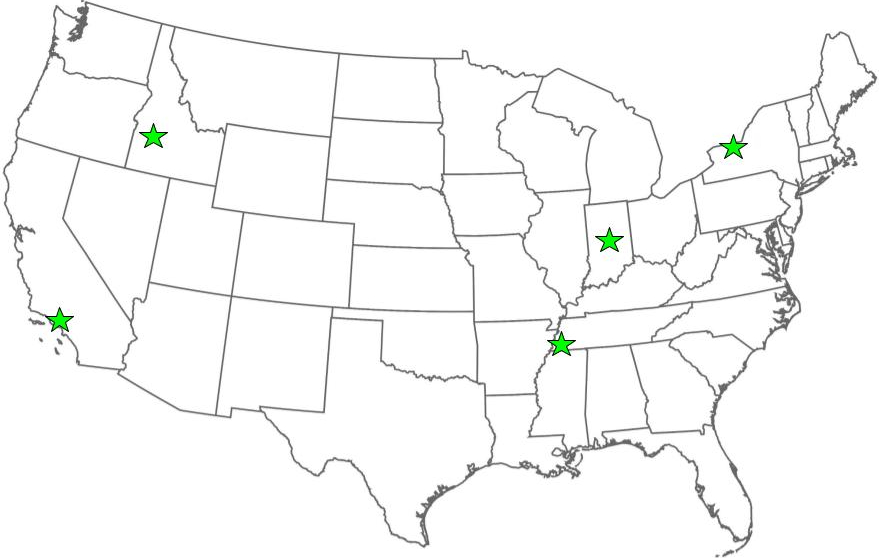
Wolff/SMG is a Rochester, NY-based fulfillment partner specializing in premium, promotional, and e-commerce fulfillment. As part of the Verde Fulfillment USA network, Wolff/SMG clients have access to facilities and capabilities across the country — without leaving the trusted relationship they’ve built locally.
If you’re evaluating whether outsourcing fulfillment makes sense for your business — or if you’re already outsourcing and wondering if you have the right partner — reach out for a free consultation.